What Does a General Contractor Actually Do? A Homeowner's Guide to Remodeling and Construction
Ask most homeowners what a general contractor does and you'll get a short answer: they hire the subcontractors and keep an eye on the work. That description isn't wrong, but it's incomplete — and it's incomplete in a way that leads to mismatched expectations, confusing contracts, and projects that stall out when no one is sure who is responsible for what.
A general contractor's responsibilities can include planning, coordinating trades, managing schedules, evaluating project conditions, communicating with customers, organizing materials, managing changes, and coordinating required inspections. The exact responsibilities depend on the project scope and contract. Understanding those responsibilities before you sign an agreement is the difference between a project that moves smoothly and one that turns into a chain of costly surprises.
Quick answer: A general contractor is the single party responsible for planning, coordinating, and completing a construction or remodeling project — pulling permits, scheduling trades, managing the budget, ordering materials, supervising the jobsite, handling change orders, and coordinating final inspections. The exact responsibilities depend on the project scope and the contract, but the GC is the one accountable for the whole job coming together.
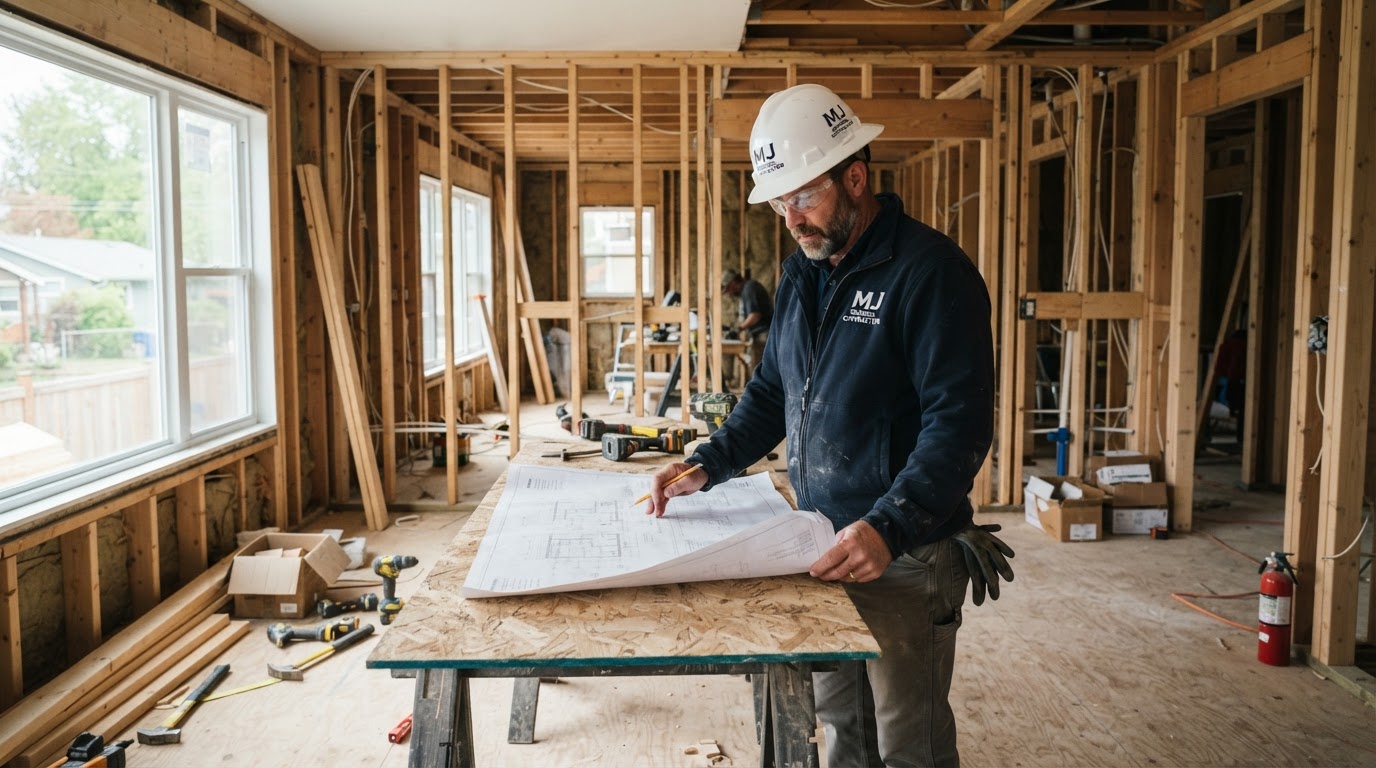
Table of Contents
What Is a General Contractor?
In practical terms, a general contractor is the single party who takes responsibility for pulling a construction or remodeling project together from start to finish. Instead of a homeowner separately hiring a framer, a plumber, an electrician, a drywall crew, and a painter — and then trying to keep them all coordinated — the general contractor manages those relationships and the sequence of work. The homeowner has one point of accountability: the GC.
That distinction matters when multiple trades are involved. An individual trade contractor is hired to perform one specialized task: installing a roof, running electrical, or hanging drywall. A subcontractor is a trade professional engaged by the general contractor to complete a specific portion of the project. The general contractor coordinates those trades so the work happens in the right order, meets code, and fits the agreed scope and budget.
Accountability is the core of the role. When a homeowner hires trades directly, a problem between two phases of work often becomes an argument about whose responsibility it was. With a general contractor, that coordination — and the accountability for the outcome — sits with one party. If the plumbing rough-in isn't ready when the drywall crew arrives, that's the general contractor's scheduling problem to solve, not the homeowner's.
What Does a General Contractor Handle During a Construction Project?
The day-to-day responsibilities of a general contractor span every phase of a project. The list below covers the major categories a GC typically manages, though the specifics always depend on what the contract includes.
Project planning and scope development
Before a tool touches the wall, the general contractor helps translate what a homeowner wants into a buildable scope. That means defining which walls move, where plumbing and electrical need to land, what materials are realistic for the budget, and what the finished project needs to include. A clear scope at the start prevents most of the disputes that show up later.
Estimating and budgeting
A general contractor builds the project budget — labor, materials, subcontractor pricing, permits, and a contingency for the conditions no one can see until demolition starts. A good estimate isn't a guess; it's a structured prediction based on the defined scope. Understanding how that estimate becomes a fixed-price contract is covered in the budgets and change orders section below.
Coordinating subcontractors and skilled trades
Coordinating trades is where the general contractor earns their role. A kitchen remodel might involve demolition, framing, plumbing rough-in, electrical rough-in, drywall, cabinet installation, countertop templation, flooring, and finish carpentry — each performed by a different crew. The GC schedules them in the right sequence and confirms the work each trade is responsible for.
Construction scheduling
One phase of construction affects another in ways that aren't obvious until you've lived through it. Plumbing and electrical rough-ins may need to be completed and inspected before drywall installation can proceed — because once the walls are closed, getting back to those systems means cutting into the work that was just finished. A general contractor sequences the work so trades arrive in the correct order, not just the most convenient one.
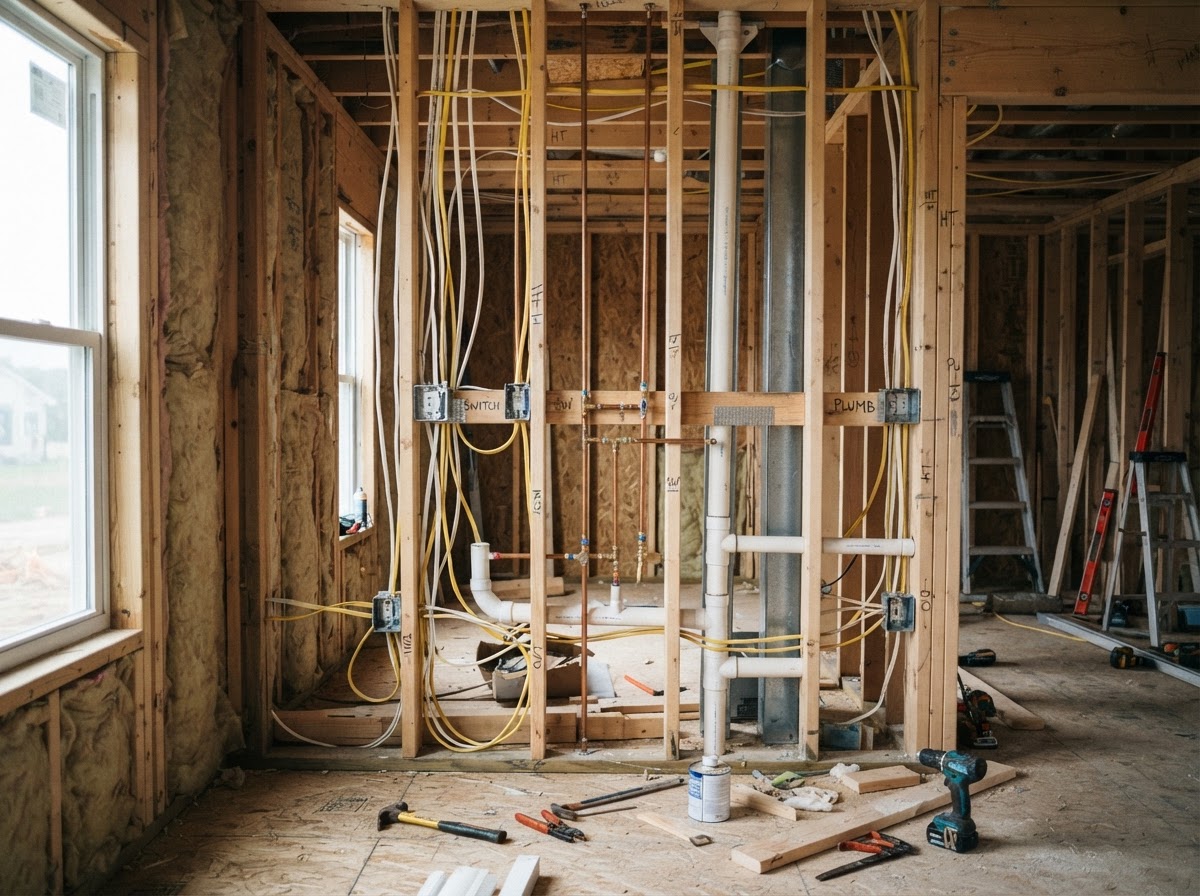
Coordinating rough-ins — framing, electrical, and plumbing must be sequenced before drywall can close the walls.
Material procurement and delivery
Materials have to arrive when the crew is ready for them, not weeks early to clutter the site or days late to leave the crew idle. A general contractor orders, tracks, and stages materials — cabinetry, tile, lumber, fixtures, and finishes — so the schedule isn't derailed by a missing shipment or a wrong-size order.
Permits, code requirements, and inspections
For most structural, electrical, and plumbing work, permits are required by the local jurisdiction, and the work has to pass inspection before it can be covered up or built upon. The general contractor knows which permits apply to the project, files them with the correct municipality, and schedules inspections at the right milestones. Skipping this step can cause failed inspections, rework, and complications when the home is eventually sold.
Jobsite supervision and quality control
A general contractor supervises the jobsite — checking that work is performed to the agreed standard, that trades are following the plans, and that problems get caught early instead of after the next crew has already built on top of them. Ongoing quality control during construction is far cheaper than tearing out finished work to fix something underneath.
Customer communication and project updates
A homeowner should never have to chase down status updates. A general contractor communicates what's happening this week, what's scheduled next, and what decisions the homeowner needs to make. Clear, consistent communication is one of the most reliable signs of a professional construction relationship.
Change orders and unexpected conditions
Projects uncover surprises — rot behind a wall, an outdated panel that won't support new circuits, a floor that needs leveling before tile can go down. A general contractor documents those discoveries, explains the options, and handles change orders in writing before extra work proceeds.
Final inspections and project completion
At the end of the project, the general contractor coordinates final inspections, resolves any remaining items, and walks the homeowner through the completed work. This is where the scope that was defined at the start is measured against what was actually delivered.

The finished result — updated flooring, trim, and lighting coordinated through a single general contractor.
General Contractor vs. Subcontractor: What's the Difference?
The cleanest way to understand the difference is to look at a remodeling project. In a bathroom remodel, a plumber runs the supply and drain lines, an electrician adds the lighting and exhaust fan circuits, a tile setter waterproofs and tiles the shower, and a carpenter handles trim. Each of those trades is a subcontractor — a specialist hired for one part of the job.
The general contractor is the one who decides when each of those specialists shows up, confirms the scope each one is responsible for, and makes sure the work they hand off to the next trade is ready for the next trade. The homeowner contracts with the general contractor; the general contractor contracts with the subcontractors. When a trade finds a problem, the general contractor is the one who decides how to resolve it within the agreed scope.
Homeowners benefit from understanding this relationship because it clarifies who to talk to when something changes. If the homeowner wants the shower drain moved, the request goes to the general contractor, who then coordinates the change with the plumber — rather than the homeowner trying to direct individual trades directly, which is how scope and responsibility get confused.
When Should a Homeowner Hire a General Contractor?
Not every project needs a general contractor. The question is whether the project involves enough trades, sequencing, or code requirements that coordination is the main challenge. Projects that usually warrant a general contractor include:
- Kitchen remodeling
- Involves cabinetry, countertops, plumbing, electrical, drywall, flooring, and finish work — often in a specific sequence with inspections in between.
- Bathroom remodeling
- Combines waterproofing, plumbing, electrical, tile, and carpentry in a small, code-heavy space.
- Basement finishing
- Requires framing, egress, electrical, plumbing, drywall, and permitting to turn raw space into legal living area.
- Home additions
- Structural work, foundation, roofing tie-in, and every interior trade — all under one permit set.
- Structural modifications
- Removing or moving load-bearing walls requires engineering, permitting, and coordinated trades.
- Whole-home renovations
- When multiple rooms and systems are involved, a single coordinator keeps the project moving.
- Commercial renovations
- Tenant build-outs and commercial improvements often require licensed coordination and inspection.
- Projects involving several trades
- Any job where three or more specialties overlap is easier to manage under one accountable party.
A smaller project — a single room painted, a toilet replaced, a fence repaired — may be appropriately handled by a specialized trade contractor without a general contractor. Hiring a general contractor for a one-trade job usually adds overhead without adding value. The purpose of a general contractor is coordination, so the project should be large enough that coordination is actually the hard part.
What Happens When a Remodeling Project Is Poorly Coordinated?
Poor coordination turns a straightforward project into a long, expensive one. Most of the problems homeowners associate with construction are really coordination problems:
- Scheduling conflicts
- Two trades expecting to work in the same space on the same day.
- Materials arriving too early or too late
- Cabinetry sitting in a damp garage for a month, or a tile crew standing around waiting on a delivery.
- Work performed out of sequence
- Drywall hung before the plumbing rough-in is inspected, meaning the wall has to be opened again.
- Unexpected demolition discoveries
- Rot, outdated wiring, or structural issues that no one planned for — and no process for handling them.
- Miscommunication between trades
- Each crew assuming another crew handled a detail, so it doesn't get handled at all.
- Unclear project scope
- Disputes over what was included because nothing was written down clearly.
- Costly rework
- Finished work torn out to fix something underneath that should have been caught earlier.
- Inspection delays
- Work that fails inspection and has to be redone before the next phase can start.
Organized construction management exists to prevent exactly these issues. A general contractor sequences the work, confirms what each trade is responsible for, and catches problems early — when they're inexpensive to fix. The value of a general contractor is rarely in doing the work faster; it's in doing the work in the right order, with the right people, and the right documentation.
How General Contractors Manage Construction Budgets and Change Orders
Construction pricing has several layers, and understanding them helps a homeowner read a contract correctly. A preliminary estimate is an early, approximate projection of cost based on the scope as it's understood at that point — it's a planning tool, not a final number. The preliminary estimate generally gets refined as material selections, subcontractor pricing, and field conditions are confirmed.
Once the scope is finalized, the estimate becomes the basis for the contract price. The contract defines what's included, what materials are covered, and what the payment terms are. Allowances are budget placeholders for selections not yet finalized — a specific tile, a fixture, a countertop — that the homeowner chooses later. If the final selection costs more than the allowance, the difference is handled through a change order.
A change order is a written agreement to modify the contracted scope, with the associated cost or credit documented before the extra work begins. Unexpected conditions — hidden damage, code upgrades triggered by the work, or a homeowner request — are the most common reasons change orders happen. The important part is that every change is documented and approved before the work proceeds, so there are no surprises on the final invoice.
This is also where a clearly defined project process helps. Our team's approach to estimates, final walkthroughs, deposits, and change orders is spelled out on our customer expectations page so homeowners know what each stage involves before the first day of work.
How Long Does a General Contractor's Project Take?
Timelines depend on a combination of factors, and any single number quoted upfront is a best-case estimate until the scope is fully developed. The factors that shape a realistic timeline include:
- Project size
- A powder room and a full-home renovation operate on completely different schedules.
- Design decisions
- Material selections and layout choices determine what can be ordered and when.
- Permit requirements
- Some jurisdictions turn permits around quickly; others take longer, especially on structural work.
- Material availability
- Special-order cabinetry, tile, or fixtures can have lead times measured in weeks.
- Trade scheduling
- Subcontractor calendars fill up, especially in peak season.
- Existing conditions
- What's found during demolition can extend the scope.
- Inspection requirements
- Work can't proceed past an inspection point until the inspection is passed.
- Weather for exterior projects
- Roofing, siding, and concrete all depend on conditions.
A responsible general contractor gives a realistic range rather than a single optimistic date, and explains what typically extends a project like yours. Asking for that range — and what could push it out — is one of the best ways to judge whether a contractor's timeline is grounded in experience.
What Should Homeowners Expect From Their General Contractor?
A professional construction relationship looks a certain way, and homeowners should expect it from the start. Reasonable expectations include:
- Clear communication
- Regular updates on progress, schedule, and decisions, without the homeowner having to chase for answers.
- Documentation
- A written scope, a written contract, and written change orders for anything that changes.
- Scope clarity
- What's included and what's an allowance, defined before work begins.
- A realistic schedule
- A timeline that accounts for permits, inspections, material lead times, and trade availability.
- Change management
- A clear process for handling unexpected conditions and homeowner-requested changes.
- A final walkthrough
- A review of the completed work against the agreed scope before the project is closed out.
These aren't extras. They're the baseline of a well-run project, and a general contractor who can't or won't provide them is telling you something about how the project will be managed.
Hiring a General Contractor in Louisville, Southern Indiana, and Greater Cincinnati
Construction requirements can vary by municipality and by state, and that variation matters more than many homeowners realize. Permitting requirements, inspection procedures, building conditions, and trade licensing are not identical across Kentucky, Indiana, and Ohio. A contractor who regularly works a given area knows which office to file with, what that office requires, and how long approvals typically take.
Louisville Metro and its surrounding counties each have their own permitting offices and inspection timelines. Northern Kentucky communities sit across several county and city jurisdictions. Crossing the Ohio River into Greater Cincinnati means a different building department entirely. And Southern Indiana communities like Jeffersonville, New Albany, and Clarksville have their own local requirements distinct from both Louisville and Cincinnati. The practical takeaway: verify that your contractor is familiar with the licensing and permitting rules for the actual location of your project, not just the region in general.
Frequently Asked Questions About General Contractors
1. What is the difference between a general contractor and a remodeling contractor?
A remodeling contractor focuses specifically on renovation work, while a general contractor can manage both remodeling and new construction and is responsible for coordinating all the trades involved. In practice, many general contractors handle remodeling as a core part of their work; the distinction matters more for licensing and scope than for the day-to-day work on most residential projects.
2. Does a general contractor perform the work personally?
It depends. Some general contractors have in-house crews for certain trades and use subcontractors for others. Either way, the general contractor is responsible for the quality and coordination of the work, whether it's performed by their own team or by a subcontractor they've engaged.
3. Who is responsible for obtaining construction permits?
For most permitted work, the general contractor pulls the permits and schedules the inspections as part of the project. A homeowner can sometimes pull permits as an owner-builder, but that shifts responsibility for code compliance onto the homeowner — which is usually not what they want on a project that requires several trades.
4. How does a general contractor charge for a project?
Most residential general contractors work on a fixed-price contract based on a defined scope, with progress payments tied to completed phases of work. Some work on a cost-plus basis, where the homeowner pays actual costs plus a management fee. The structure should be clearly spelled out in the contract before work begins.
5. Can I hire my own subcontractors instead?
Sometimes, but it complicates accountability. If a homeowner brings in their own trade, the general contractor may not warranty that portion of the work, and coordination between that trade and the rest of the project can become unclear. If you want to use a specific subcontractor, discuss it with the general contractor before the contract is signed.
6. What should be included in a general contractor's agreement?
A solid agreement includes the full scope of work, materials and allowances, start and completion dates, payment schedule, permit responsibility, change-order process, and warranty terms. If any of these are missing or vague, ask for them to be spelled out before signing.
7. How does a general contractor handle unexpected repairs?
Unexpected conditions are documented and handled through a written change order before the additional work proceeds. The contractor explains what was found, what it means for the scope, and what the cost will be — and the homeowner approves the change in writing before the work happens.
8. When should I contact a general contractor about my project?
As early as you have a real project in mind. A general contractor can help shape the scope, identify permitting and structural considerations, and give you a realistic budget before you've committed to specific selections — which is far cheaper than redesigning a project after materials are ordered.
Planning a Construction or Remodeling Project?
Understanding what a general contractor does is only part of choosing the right company. Before signing an agreement, homeowners should also know which questions to ask when evaluating a contractor. Proper planning, defined expectations, and coordinated construction help create a smoother renovation process — and a project that holds up long after the crews leave.
If you're planning a kitchen, bathroom, basement, or whole-home project across Greater Louisville, Southern Indiana, Northern Kentucky, or Greater Cincinnati, our team can walk you through the scope, the process, and a realistic estimate. Reach out and we'll help you understand what your project will actually involve.
Ready to Start Your Project?
Talk to our team about your kitchen, bathroom, basement, or whole-home project. We'll walk you through the scope, the process, and a realistic estimate.
Frequently Asked Questions
What is the difference between a general contractor and a remodeling contractor?
Does a general contractor perform the work personally?
Who is responsible for obtaining construction permits?
How does a general contractor charge for a project?
Can I hire my own subcontractors instead?
What should be included in a general contractor's agreement?
How does a general contractor handle unexpected repairs?
When should I contact a general contractor about my project?
Keep Reading
How to Vet a General Contractor: 12 Questions to Ask Before You Sign
Before you sign anything, verify the contractor's license and insurance directly, get a written contract that spells out scope and payment terms, confirm who is pulling permits, and ask to see real photos and talk to a recent customer.
Why Construction Estimates Vary So Much: Understanding What You're Actually Paying For
Three contractors, three very different prices for the same project. Learn what actually drives construction estimate differences — scope, materials, labor, overhead, and hidden conditions — so you can compare bids intelligently instead of just chasing the lowest number.
How Much Does a Home Renovation Cost in 2026? A Homeowner's Guide to Kentucky, Indiana & Ohio
A realistic look at home renovation costs across Kentucky, Southern Indiana, and Greater Cincinnati — what drives price, average ranges for kitchens, bathrooms, basements, and whole-home remodels, plus how to build a renovation budget that actually holds up.
Basement Remodeling in Kentucky, Indiana & Ohio: Costs, Planning, Permits & Common Mistakes
An unfinished or outdated basement can become real living space — but moisture, ceiling height, egress, and below-grade plumbing make it the most condition-dependent renovation there is. Here's what actually drives basement finishing and remodeling costs across Kentucky, Southern Indiana, and Greater Cincinnati, plus how to plan a basement project that stays dry and on budget.
Kitchen Remodeling in Kentucky, Indiana & Ohio: Costs, Planning, Design & Mistakes to Avoid
A kitchen remodel is several projects stacked into one room — cabinets, countertops, plumbing, electrical, flooring, and finish carpentry all coordinated inside the same space. Here's what actually drives kitchen remodeling costs across Kentucky, Southern Indiana, and Greater Cincinnati, how to plan before demolition, and the mistakes that turn a kitchen project into a redo.
Plumbing Services Explained: Repairs, Installations, Upgrades & What Property Owners Should Know
Plumbing is one of the most important systems in any property — and one of the most expensive to ignore. Here's what residential and commercial property owners across Kentucky, Southern Indiana, and Greater Cincinnati should know about plumbing repairs, installations, upgrades, the phases of plumbing during construction, and the decisions that keep a plumbing project from becoming a repair.
Roof Repair vs. Replacement: How to Know What Your Property Really Needs
A ceiling stain after a storm doesn't automatically mean the whole roof has to come off — but a roof that's been repaired three times in three places may be telling you it's time. Here's how to think through the repair-vs-replace decision for both residential and commercial roofs across Kentucky, Southern Indiana, and Greater Cincinnati, what actually drives the cost difference, and when an inspection is the right next step.
Concrete Installation: What Homeowners & Commercial Property Owners Should Know Before Starting a Project
Durable concrete isn't just about pouring and smoothing — it's about what happens underneath. Here's what residential and commercial property owners across Kentucky, Southern Indiana, and Greater Cincinnati should know about site preparation, grading, drainage, reinforcement, finishing, curing, and cost before starting a concrete project.
Drywall Installation & Repair: What Homeowners and Commercial Property Owners Should Know
A smooth, paint-ready wall is the result of correct hanging, taping, multiple coats, and careful sanding — not just panels screwed to studs. Here's what residential and commercial property owners across Kentucky, Southern Indiana, and Greater Cincinnati should know about drywall installation, repair, finishing levels, water damage, and cost before starting a project.