How to Vet a General Contractor: 12 Questions to Ask Before You Sign
Quick answer: Before you sign anything, verify the contractor's license and insurance directly, get a written contract that spells out scope and payment terms, confirm who is pulling permits, and ask to see real photos and talk to a recent customer. Contractors who hesitate on any of these are telling you something.
Table of Contents
Why Vetting Matters More Than the Estimate
The lowest bid isn't the best deal if the person behind it cuts corners on insurance, permits, or the contract itself. Most problems homeowners run into with a remodeling or construction project — cost overruns, unfinished work, disputes over what was promised — trace back to something that could have been caught before the contract was signed. These are the twelve questions worth asking every contractor you're considering, whether the job is a small repair or a full renovation.
Licensing and Insurance: The First Two Questions
1. Are you licensed to do this type of work in this state?
Requirements vary by state and by trade, so ask directly rather than assuming. A contractor who can't answer clearly, or who gets defensive about the question, is a reason to keep looking.
2. Can I see a current certificate of insurance?
A legitimate contractor should be able to provide proof of general liability insurance and workers' compensation coverage without hesitation. This protects you if something goes wrong on your property during the job — without it, you could be personally liable for an injury or damage that happens on your own site.
The Contract: What It Should Actually Say
3. What exactly is included in this contract?
A solid contract spells out the full scope of work, materials to be used, start and estimated completion dates, and payment terms — in writing, not verbally promised. If a contractor is reluctant to put details in writing, that reluctance is the answer.
4. What happens if the scope changes?
Projects sometimes uncover surprises once walls are opened or old work is exposed. Ask how change orders are handled — they should be documented and agreed to in writing before extra work begins, not added to the bill after the fact.
Payment Schedule Red Flags
5. What's the payment schedule?
A reasonable payment schedule ties payments to completed phases of work, not to the calendar. Be cautious of a schedule that's front-loaded heavily toward the start of the project.
6. Will you ask for full payment upfront?
This is one of the clearest warning signs in the industry. A contractor asking for full payment before work begins has little incentive to finish the job to your satisfaction.
Permits: Who Pulls Them and Why It Matters
7. Will you pull the required permits, or is that on me?
For most structural, electrical, and plumbing work, permits are required by the local jurisdiction. A reputable contractor pulls these themselves as part of the job and is familiar with the process in the counties and cities they work in.
8. What happens if the work isn't permitted?
Unpermitted work can create real problems later — from failed inspections to complications when you sell the home. If a contractor suggests skipping permits to save time or money, that's a decision that can come back to cost you far more than it saves.
Checking Real Work, Not Just References
9. Can I see photos of projects similar to mine that you've actually completed?
Real project photos tell you more than a portfolio of stock images or renderings ever will. Ask specifically for work similar in scope to your own project.
10. Can I talk to a recent customer, not just your best one from years ago?
A contractor confident in their work will connect you with someone from a recent job, not just a hand-picked testimonial from the distant past.
Timeline and Communication
11. What's a realistic timeline for a project like mine, and what could extend it?
Ask for a realistic range, not just a best-case number, and ask what typically causes delays on similar projects — weather, material lead times, permit approval, and so on.
12. How will we communicate during the project, and who's my point of contact?
Know before the job starts who to call with questions and how often you should expect updates. A clear answer here is a good sign of how the rest of the project will go.
A Recent Project
A finished basement remodel completed by our crews in Louisville, KY. The space was transformed from an unfinished, underused lower level into a clean, functional living area — the kind of project where asking the right questions upfront (scope, permits, payment schedule, timeline) made the difference between a smooth build and a stressful one.
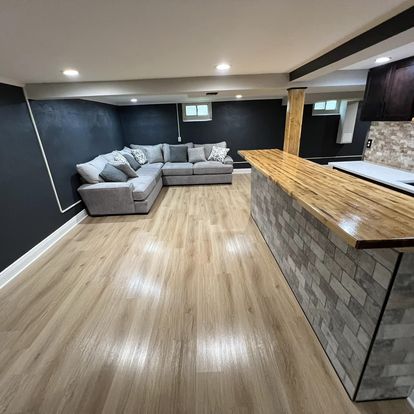
Completed basement remodel — Louisville, KY.
What's Different Across Our Service Area
Greater Louisville: From St. Matthews to Jeffersontown to Prospect, Louisville Metro has a mix of established neighborhoods with older housing stock and newer construction in the surrounding suburbs, each with its own permitting office and inspection timeline to navigate.
Northern Kentucky: Communities along the I-71 corridor — Florence, Covington, Newport, Fort Thomas, and Independence — sit across several different county and city permitting jurisdictions, so a contractor working this area needs to know which office to file with for a given address.
Greater Cincinnati, OH: Crossing the river brings a different building department and inspection process entirely. A contractor who regularly works both sides of the Ohio River knows how those processes differ, rather than treating Ohio and Kentucky jobs the same way. See our Cincinnati and full service area pages for more.
Southern Indiana: Jeffersonville, New Albany, and Clarksville have their own local permitting requirements distinct from both Louisville and Cincinnati, and homeowners here should confirm their contractor is familiar with Indiana-specific licensing rules.
Lexington & the Bluegrass Region: Lexington, Georgetown, Nicholasville, Winchester, and Versailles include a significant number of older and historic homes, where renovation work often requires extra care around existing structure and, in some cases, historic district guidelines.
Frequently Asked Questions
How long does it typically take to get quotes from multiple contractors?
Is the cheapest quote ever the right choice?
Should I get everything in writing, even small jobs?
What's a reasonable deposit to pay before work begins?
Can I check a contractor's license status myself?
Choosing the right contractor starts long before the first day of work. Ask these questions, get the answers in writing, and you'll avoid most of the problems that turn a home improvement project into a headache.