Plumbing Services Explained: Repairs, Installations, Upgrades & What Property Owners Should Know
Plumbing is one of those systems that's easy to take for granted — until it fails. It runs silently inside the walls, under the floors, and above the ceilings, supplying water where it's needed and carrying waste where it should go. Every kitchen, bathroom, laundry room, mechanical room, and commercial restroom depends on it, and when something goes wrong, the damage isn't just the pipe — it's the drywall, the flooring, the framing, and the finishes around it. A plumbing problem that's ignored doesn't stay small; it spreads into the structure, and the cost of the repair grows with the damage.
For property owners across Kentucky, Southern Indiana, Northern Kentucky, and Greater Cincinnati, understanding how plumbing services work — what repairs, installations, replacements, and upgrades actually involve, how the phases of plumbing fit into a construction project, and when a problem needs professional attention — helps make better decisions about maintenance, renovations, and hiring. This guide covers residential and commercial plumbing, the common problems that warrant attention, the phases of plumbing during construction, what plumbing work costs and why, and the mistakes that turn a plumbing project into a repair. It's written for both homeowners and commercial property owners, because the fundamentals are the same even when the scale differs.
Quick answer: Plumbing services cover repairs, fixture installations, replacements, upgrades, repiping, and the plumbing rough-in and finish work that goes into any kitchen, bathroom, basement, or commercial renovation. The most important things to understand are that plumbing is a system — not a collection of parts — that concealed work has to be inspected before walls close, and that moving fixtures is one of the biggest cost drivers in any renovation. Permits, licensing, and inspection requirements vary across Kentucky, Indiana, and Ohio, and the only accurate cost for your project comes from a site visit and a written estimate based on the actual conditions.
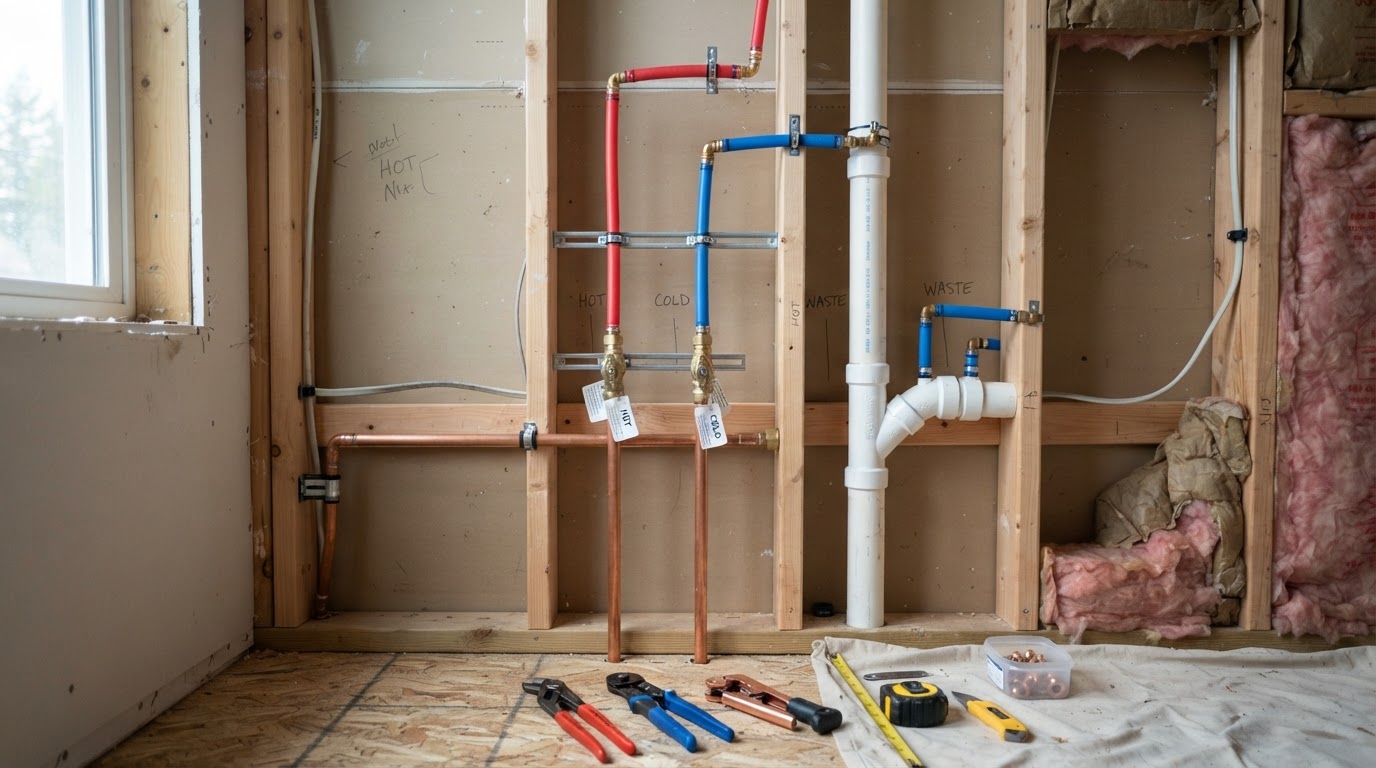
Table of Contents
Understanding Residential and Commercial Plumbing Services
Plumbing systems look similar on the surface — pipes, fixtures, drains, valves — but the demands placed on them differ significantly between a home and a commercial property. Residential plumbing serves a household: kitchens, bathrooms, laundry connections, water heaters, and the supply and drain piping that ties them together. The fixtures are standard, the usage patterns are predictable, and the code requirements are built around residential occupancy. Commercial plumbing serves a business: restrooms for employees and customers, plumbing for tenant improvements and buildouts, fixture replacements, and water supply and drainage modifications sized for higher traffic and longer duty cycles. The code requirements, accessibility considerations, fixture demands, and operational constraints are different, and a project that's straightforward in a home can be substantially more involved in a commercial setting.
- Residential plumbing examples
- Kitchen and bathroom plumbing, including sink, toilet, shower, and tub connections.
- Laundry connections and water supply lines for washing machines and utility sinks.
- Water heater replacement, including gas, electric, and tankless installations.
- Fixture replacements — faucets, toilets, vanities, shower systems, and garbage disposals.
- Supply and drain piping, including repiping when old lines fail or leak repeatedly.
- Plumbing scope that accompanies kitchen, bathroom, or whole-home renovations.
- Commercial plumbing examples
- Restroom installations and upgrades, including multi-stall fixtures and partitions.
- Plumbing for tenant improvements and commercial buildouts.
- Fixture replacements for higher-traffic restrooms and break rooms.
- Water supply and drainage modifications for reconfigured commercial spaces.
- Coordination with HVAC, electrical, and fire suppression systems in occupied buildings.
Commercial plumbing projects frequently involve different code requirements — accessibility standards, fixture counts based on occupancy, backflow prevention, and grease or pretreatment where applicable. The operational constraints are different too: a business can't always shut down for a week, and plumbing work may need to be scheduled around building operations, after hours, or in phases. Not every type of specialized commercial plumbing is within every contractor's scope, and the work that A Kingdom Construction coordinates is the plumbing-related construction tied to the renovation, repair, or buildout project — not standalone commercial plumbing service calls. Where a project requires licensed plumbing trades, that work is performed by qualified, licensed plumbers and inspected under the applicable permit.
Common Plumbing Problems Property Owners Should Never Ignore
Plumbing problems rarely start big. A dripping faucet, a slow drain, a toilet that runs intermittently — each one looks minor on its own, but each can be a symptom of something more significant happening where you can't see it. The cost of ignoring a small plumbing issue is almost always higher than the cost of addressing it early, because water does damage silently and continuously. These are the problems that warrant attention before they become repairs:
- Leaking pipes
- A visible leak under a sink or behind a toilet is the easy one. The leaks that matter more are the slow, concealed leaks inside walls, under floors, or at pipe joints you can't see — the ones that show up as a water stain, a damp spot, or an unexplained drop in water pressure.
- Low water pressure
- A sudden or gradual pressure drop can indicate a supply line issue, a partially closed valve, mineral buildup in aging pipes, or a leak somewhere in the system reducing flow.
- Slow or recurring clogged drains
- A drain that clogs repeatedly isn't just inconvenience — it can signal a deeper blockage in the main line, root intrusion, a collapsed or misaligned pipe, or a venting problem that prevents proper flow.
- Running toilets
- A toilet that runs continuously wastes water silently and can add up quickly on a water bill. It's usually a worn flapper, fill valve, or flush mechanism — simple to fix, but easy to ignore until the bill arrives.
- Water heater problems
- Inconsistent hot water, rumbling noises, discolored water, or a unit that's past its service life are all signs that the water heater needs attention before it fails completely — usually at the worst possible time.
- Unusual water bills
- A spike in water usage with no change in habits is one of the clearest indicators of a hidden leak. Tracking the bill is often how concealed leaks get discovered.
- Corroded or deteriorating pipes
- Older galvanized or cast iron supply and drain lines corrode from the inside. Visible corrosion at exposed fittings, rust-colored water, or recurring pinhole leaks are signs the piping is nearing the end of its service life.
- Water stains and hidden moisture
- A stain on a ceiling or wall, a damp cabinet floor, or musty smell in a specific area can point to a slow leak that's been running behind the finish for weeks or months.
- Sewer odors
- A persistent sewer smell near a drain or fixture usually means a dry trap, a broken vent, or a problem with the drain seal — any of which can indicate a deeper plumbing issue.
Some of these are routine maintenance concerns — a worn flapper, a slow drain, a fixture that needs replacing. Others — concealed leaks, pressure drops, recurring clogs in the main line, sewer odors — can indicate a more significant problem that warrants prompt professional evaluation. The distinction matters: routine maintenance can wait for a scheduled service, but a leak that's damaging the structure or a drain that's backing up needs attention before the damage spreads.
Plumbing Repairs vs. Plumbing Replacement
Not every leaking pipe or failing fixture needs to be replaced, and not every aging plumbing system needs to be repiped. The decision between repairing and replacing depends on the pipe's age, its material, the condition of the surrounding system, how accessible the problem is, whether leaks are recurring, and what the long-term cost of continued repairs looks like compared to replacement. A single leak at an accessible joint in an otherwise sound system is a repair. The third leak in the same wall from sixty-year-old galvanized pipe is a sign the system is failing and a repair is just buying time.
Replacement becomes the better choice when the piping material has reached the end of its service life, when leaks are recurring in different locations, when corrosion or mineral buildup is restricting flow throughout the system, or when the cost of the next repair approaches the cost of replacing the failing section. Accessibility matters too: if a wall has to be opened to reach a leak, it may make sense to replace the piping in that wall while it's exposed rather than repairing one joint and waiting for the next one to fail. Material compatibility is a factor as well — mixing incompatible metals can accelerate corrosion, and replacement piping has to be compatible with the existing system. There's no universal rule that all older plumbing must be replaced, and there's no universal rule that a repair is always sufficient. The right answer depends on the specific conditions of the specific system, which is why it takes an evaluation to know.
Plumbing Installation and Upgrades
Plumbing installation is more than connecting a fixture to a pipe. Every installation — whether it's a kitchen sink, a bathroom vanity, a toilet, a shower system, a water heater, or a laundry hookup — involves drainage, venting, supply requirements, accessibility, and code compliance. A fixture that drains needs a properly vented drain line to flow correctly. A water heater needs supply, drain, gas or electrical, temperature and pressure relief, and a pan where required. A shower needs waterproofing behind the walls, not just a showerhead and a drain. The visible fixture is the easy part; the infrastructure behind it is what determines whether it works and whether it passes inspection.
- Kitchen sinks and faucets
- Supply lines, drain assembly, garbage disposal connection where applicable, and access for shutoff valves.
- Bathroom vanities and sinks
- Supply, drain, venting, and countertop coordination for the fixture to sit flush and drain properly.
- Toilets
- Closet flange condition, supply, and rough-in spacing. A new toilet on a damaged flange will leak.
- Bathtubs and showers
- Drain, supply, venting, waterproofing behind the surround or tile, and proper flashing at the shower pan.
- Water heaters
- Gas or electrical supply, temperature and pressure relief valve, drain pan, expansion tank where required, and proper venting for combustion units.
- Plumbing for new bathrooms and commercial restrooms
- Full rough-in — supply, drain, vent, and fixture layout — designed and installed to code before walls close.
The reason installation involves more than connecting a fixture is that plumbing is a system, not a collection of parts. Drainage has to flow downhill to the main sewer line, and if it doesn't, a pump is needed. Venting has to allow air into the system so drains don't siphon traps dry. Supply lines have to be sized for the fixtures they serve. Accessibility means shutoffs are reachable when something needs service. And every bit of concealed work — the piping inside the walls and under the floors — has to be inspected before it gets covered up. Skipping any of these is how a new installation becomes a callback.
Understanding the Phases of Plumbing During Construction and Renovation
When plumbing is part of a construction or renovation project — a new bathroom, a kitchen remodel, a basement finish, a commercial buildout — it moves through a sequence of phases. Understanding these phases helps explain why plumbing work can't be done all at once, why inspections matter, and why the rough-in has to be coordinated with the other trades before walls close. These are the five general stages, though the actual sequencing and inspection requirements always vary by project and by jurisdiction.
Stage 1 — Planning and Evaluation
Before any pipe is run, the existing plumbing system is reviewed to understand what's there, what's serviceable, and what needs to change. Fixture locations are determined based on the layout, existing piping is evaluated for condition and capacity, and the project scope is established with the permit requirements identified. This is where the layout is locked in — where the sink goes, where the shower drains, where the water heater sits — and where the routing is planned so supply, drain, and vent lines all reach the right places.
Stage 2 — Demolition and Preparation
Existing fixtures, piping, and finishes are disconnected or removed as needed, and the relevant areas are exposed so concealed conditions can be assessed. This is where the project finds out what's behind the walls — the condition of the existing piping, the framing, and anything that demolition reveals. If the existing plumbing is damaged, improperly vented, or not to code, that gets identified now, before the new work goes in.
Stage 3 — Rough-In Plumbing
Rough-in is the installation or relocation of supply, drain, and vent piping before any finished surface goes on. The pipes are run through framing, under floors, and inside walls; connections are made to the existing system; and everything is positioned for the fixtures that will be installed later. Rough-in has to be coordinated with framing, electrical, HVAC, and cabinetry because all of these trades occupy the same wall and floor cavities. A supply line routed through a stud where a cabinet needs a cutout, or a drain that lands where the electrical panel needs clearance, is a conflict that costs time and money to fix after the fact. Planning the rough-in around every trade's requirements is what keeps the project moving.
Stage 4 — Testing and Rough-In Inspections
Before walls close and floors cover the piping, the rough-in is tested — pressure testing supply lines, leak testing drain connections, verifying venting — and inspected by the local authority. This is one of the most important inspections in any plumbing project, because it's the last chance to see and verify the concealed work before it's covered. If the rough-in doesn't pass, corrections are made while the piping is still accessible. Once it passes, the walls and floors can close and the project moves to finish plumbing.
Stage 5 — Finish Plumbing and Final Verification
After walls are closed, finished, and the space is ready, fixtures are installed and connected — sinks, faucets, toilets, showers, vanities, water heaters. Equipment is connected, the system is tested under real conditions, and any required final inspections are completed. This is where the plumbing goes from infrastructure to a working system, and where leaks, pressure issues, or drainage problems that weren't visible during rough-in get caught and corrected.
Rough-in plumbing and finish plumbing are two different scopes with different inspections. Rough-in is the concealed piping — supply, drain, and vent — installed and inspected before walls close. Finish plumbing is the fixture installation — sinks, toilets, showers — completed and verified after the space is finished. Skipping the rough-in inspection and closing walls is how concealed plumbing failures get hidden, not avoided.
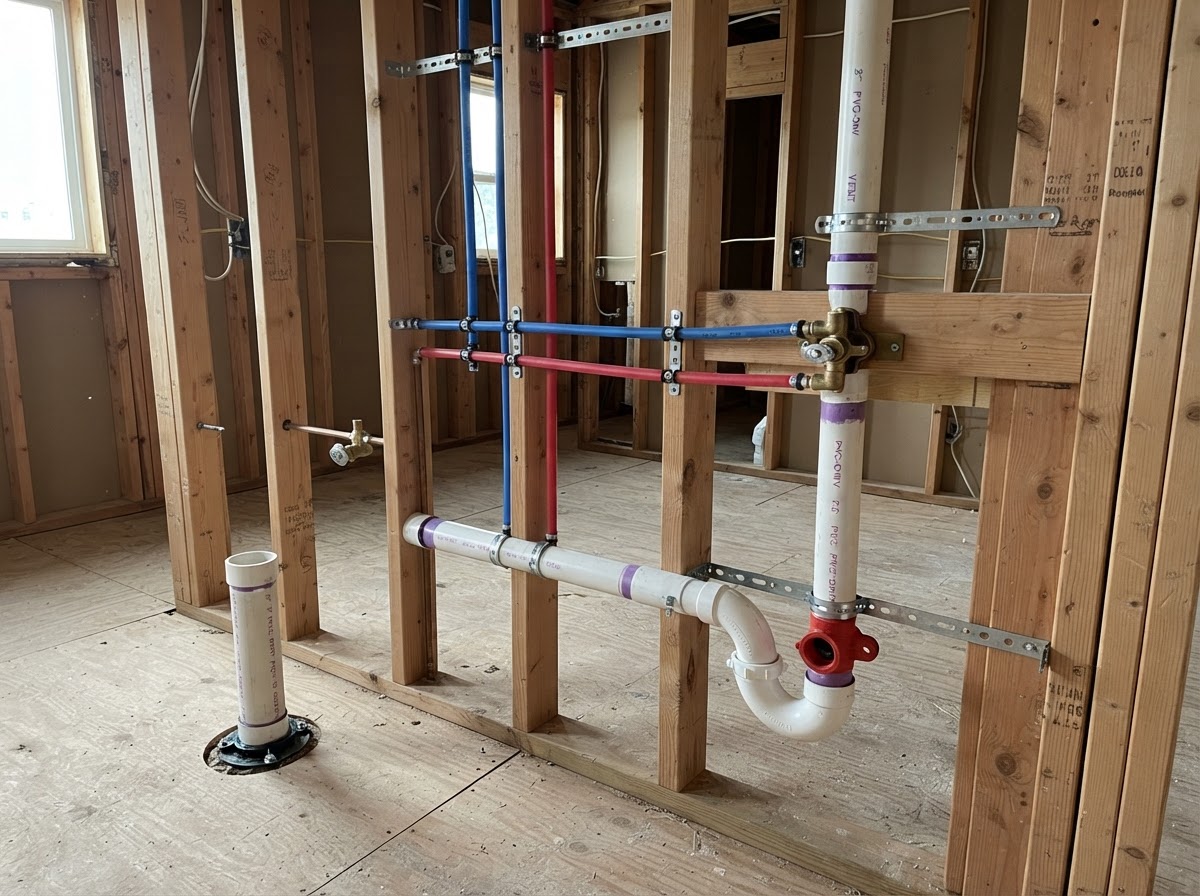
Rough-in plumbing is the concealed infrastructure — supply, drain, and vent piping — that has to be installed, tested, and inspected before walls close.
Why Plumbing Planning Matters During Kitchen and Bathroom Remodeling
Plumbing is one of the biggest cost and schedule variables in any kitchen or bathroom remodel, and most of the decisions that drive that cost are made in planning, not in construction. Keeping the existing layout — same sink location, same toilet position, same shower footprint — means the existing supply and drain lines stay where they are. Moving any of them means running new piping through walls, floors, or joists, tying into the existing system, and pulling permits for the work. The difference between keeping and moving a fixture can be one of the largest line items in the renovation budget.
- Relocating a sink
- Moving a kitchen sink means rerouting supply, drain, and vent lines, often through cabinetry and joists, and sometimes through a slab.
- Installing or relocating a shower
- A new shower location requires drain routing, waterproofing behind the walls, and supply placement — all before tile.
- Replacing a bathtub
- A tub swap in the same location is straightforward; moving a tub reroutes drain and supply and may require floor repair.
- Moving a toilet
- A toilet move is one of the most expensive plumbing changes in a bathroom because the 3-inch or 4-inch drain line is the hardest to reroute.
- Adding a kitchen island with a sink
- An island sink requires supply and drain routed through the floor, which can mean trenching a slab or accessing from below.
- Installing a dishwasher or adding fixtures
- Each new fixture adds supply, drain, and sometimes venting — and each addition is a permitting and inspection item.
- Adding a bathroom where one didn't exist
- A new bathroom is a full rough-in from scratch — supply, drain, vent, and in a basement, often a sewage ejector pump.
- Coordinating tile and waterproofing
- Shower and tub surrounds require waterproofing behind the tile, and the plumbing rough-in has to be positioned before the waterproofing goes on.
This is why plumbing planning has to happen before demolition, not during it. A layout decision made on paper — keeping the sink where it is, or choosing a shower layout that uses the existing drain — can save thousands in plumbing scope. A decision made after demolition, when the walls are open and the existing piping is visible, is often too late to avoid the cost of rerouting. Our guide to what a general contractor actually does explains how plumbing fits into the broader construction coordination — and our article on why construction estimates vary covers how these scope decisions show up in the pricing.
Commercial Plumbing Considerations
Commercial plumbing projects carry considerations that residential work doesn't. A commercial restroom serves more people, more often, and with less tolerance for downtime — which means fixture durability, maintenance access, and scheduling all matter more. Accessibility requirements under the applicable code govern fixture height, clearance, and layout. Restroom capacity depends on occupancy and building type, and tenant improvements often require reconfiguring plumbing to serve a new layout. The plumbing trades have to coordinate with the other commercial construction trades — electrical, HVAC, fire suppression — inside an occupied building where business interruption is a real cost.
- Restroom capacity and fixture counts
- Commercial code sets minimum fixture counts based on occupancy, and a buildout may need to add or reconfigure restrooms to meet them.
- Accessibility requirements
- Fixture height, clearance, grab bar placement, and approach space are governed by accessibility standards that differ from residential code.
- Tenant improvements and buildouts
- Reconfiguring a commercial space often means relocating plumbing to serve a new layout — restrooms, break rooms, and service sinks.
- Business interruption and scheduling
- Plumbing work in an operating business may need to be phased, scheduled after hours, or coordinated to minimize disruption — though downtime can't always be eliminated.
- Permits and inspections
- Commercial plumbing work requires permits and inspections under the applicable commercial code, and the requirements differ from residential.
- Fixture durability and maintenance access
- High-traffic commercial fixtures need to be durable and serviceable, with shutoffs and cleanouts accessible for maintenance.
The scope of commercial plumbing work A Kingdom Construction coordinates is the plumbing-related construction tied to a renovation, repair, or buildout project — not standalone commercial plumbing service calls. Where a project requires licensed plumbing trades, that work is performed by qualified, licensed plumbers and inspected under the applicable permit. The key difference from residential work is that the stakes are higher, the code is different, and the coordination has to account for a business that needs to keep running.
How Much Do Plumbing Repairs and Installations Cost?
Plumbing costs range widely because the scope ranges widely — from a fixture replacement to a full repipe to a new bathroom rough-in. The factors that influence pricing include the type of work, whether it's a repair or a replacement, the fixture selection, the labor required, the pipe materials, the accessibility of the work, whether walls or floors need to be opened, drainage modifications, permit and inspection costs, and whether it's residential or commercial scope. The ranges below are broad national and regional averages drawn from widely cited plumbing cost sources current as of the article date — not contractor quotes, and not a guarantee of what your specific project will cost. The only accurate number comes from a site visit and a written estimate based on the actual conditions.
Cost ranges below are broad national/regional averages for planning, not quotes. Plumbing costs depend on the type of work, the existing conditions, accessibility, materials, and the applicable permits and inspections. Every project is estimated individually based on actual scope and the local permitting jurisdiction.
- Fixture replacement (faucet, toilet, vanity)
- A straightforward fixture swap at existing connections is on the lower end; a fixture that requires supply or drain modifications, or a vanity that needs countertop and plumbing coordination, is higher.
- Water heater replacement
- A like-for-like tank replacement is less than a conversion to tankless, which may require gas line or electrical upgrades, venting modifications, and additional permitting.
- Drain cleaning and clearing
- Routine drain cleaning is a service call; clearing a main line blockage or root intrusion is higher, and if the pipe is collapsed or failing, the repair cost is substantially more.
- Leak repair
- An accessible joint repair is straightforward; a concealed leak inside a wall or under a slab requires opening and repairing the finish, which adds drywall, tile, or flooring restoration to the plumbing repair.
- Repiping
- Replacing the supply or drain piping throughout a home or section is one of the larger plumbing investments, driven by the size of the system, the material, and the accessibility of the piping.
- New bathroom or kitchen plumbing rough-in
- Adding plumbing where it didn't exist, or relocating fixtures, is the highest-cost plumbing scope in a renovation — it's a full rough-in with supply, drain, vent, permits, and inspections.
Commercial plumbing projects carry additional cost factors: higher-duty fixtures, code-driven fixture counts, accessibility requirements, and the scheduling and phasing needed to work around building operations. The reason no two plumbing projects have the same price is that no two plumbing systems have the same conditions — and the conditions behind the walls, under the floor, and at the connection points are what determine the real scope. That's why plumbing work is estimated from a site visit, not priced from a menu.
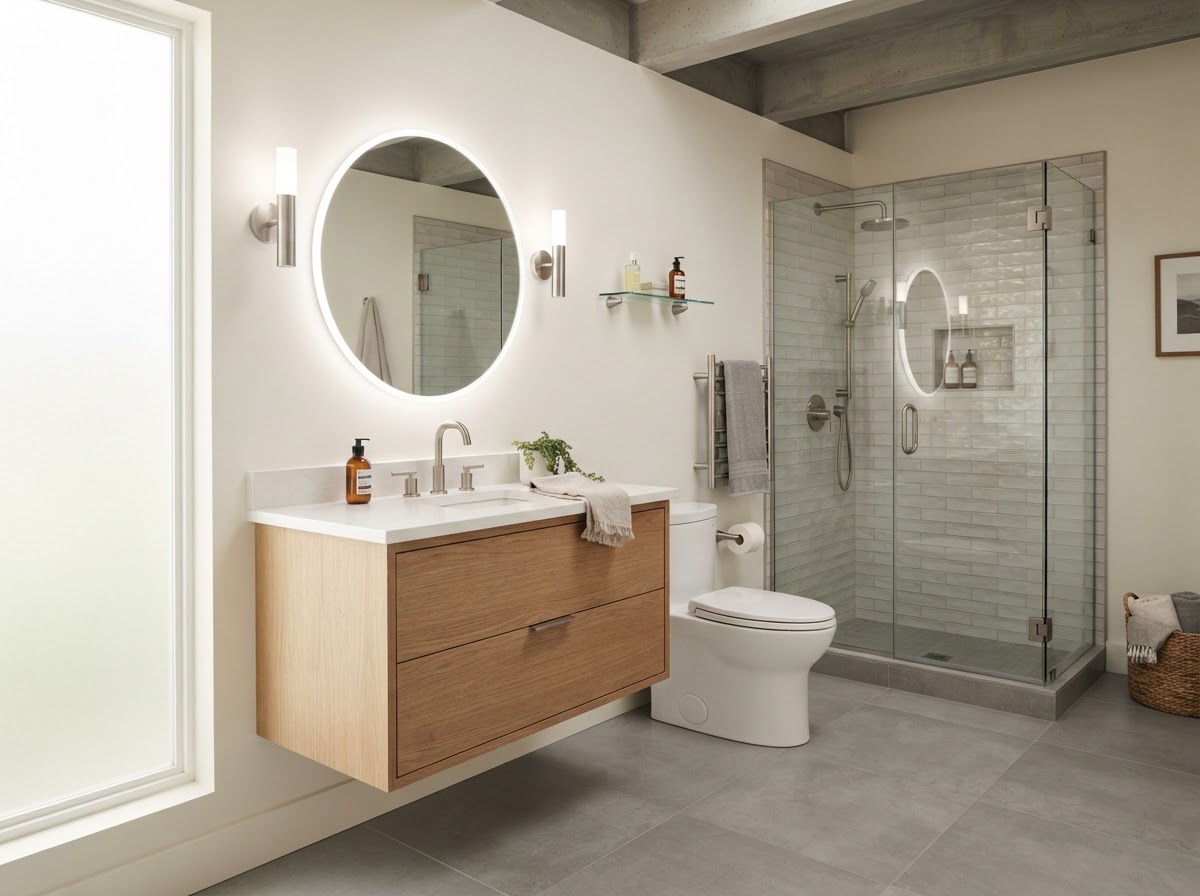
Finish plumbing is where the fixtures go in and the system gets tested under real conditions — the stage that turns rough-in into a working bathroom or kitchen.
Plumbing Maintenance Tips for Homeowners and Commercial Property Owners
Plumbing maintenance is about catching small issues before they become repairs. Most of it is observation — watching for changes, checking accessible connections, and addressing problems early rather than waiting for them to escalate. These are practical preventive steps that property owners can take, but none of them replace the value of a professional evaluation when something seems wrong.
- Check for visible leaks
- Look under sinks, around toilets, at water heater connections, and at visible supply lines. A slow drip caught early is a repair; the same drip ignored is water damage.
- Monitor water pressure changes
- A sudden pressure drop can indicate a leak, a failing valve, or buildup in the supply lines. A gradual change over time can signal aging piping.
- Maintain water heaters per manufacturer guidance
- Flushing, anode rod inspection, and temperature settings should follow the manufacturer's recommendations. A neglected water heater fails sooner and less predictably.
- Address recurring drain problems promptly
- A drain that clogs repeatedly isn't fixed by clearing it again — it likely has a deeper issue that needs to be diagnosed, not just reopened.
- Inspect accessible connections
- Supply lines, shutoff valves, and fixture connections that are visible should be checked for corrosion, weeping, or loose fittings.
- Protect plumbing from freezing
- In Kentucky, Southern Indiana, and Ohio winters, exposed piping in crawlspaces, basements, and exterior walls needs insulation or protection. A frozen pipe that bursts is one of the most expensive plumbing failures.
- Monitor unusual water consumption
- An unexplained increase in water usage is often the first sign of a concealed leak. Tracking the water bill is practical leak detection.
- Schedule professional evaluations when appropriate
- When something seems off — a noise, a smell, a pressure change, a recurring clog — a professional evaluation diagnoses the cause before it becomes a repair.
These steps don't replace qualified trades for any work involving supply, drain, or vent piping — that's regulated work that requires licensing and inspection. But observation and early action are what keep a plumbing system from failing silently, and they're the maintenance that costs nothing compared to the repair it prevents.
Common Plumbing Mistakes That Lead to Expensive Repairs
Most expensive plumbing repairs start with a small, avoidable mistake — a problem ignored, a shortcut taken, or a scope decision made without understanding the consequences. These are the ones that show up most often, and each one costs more to fix after the fact than it would have cost to address up front:
- Ignoring small leaks
- A slow leak inside a wall or under a floor doesn't stop on its own. It saturates framing, grows mold, and rots the subfloor — and the repair grows from a plumbing fix to a structural restoration.
- Using inappropriate drain-cleaning methods
- Chemical drain cleaners can corrode older pipes and don't address the underlying blockage. Mechanical clearing by a qualified professional is the right approach for a recurring clog.
- Failing to address recurring clogs
- Clearing a clog without diagnosing why it recurs leaves the underlying problem — root intrusion, a collapsed pipe, a venting issue — to cause the next clog.
- Improper fixture installation
- A fixture installed without proper sealing, supply connection, or drain alignment will leak at the connection — often concealed, often damaging.
- Inadequate plumbing venting
- Drains without proper venting siphon traps dry, which allows sewer gas into the building. Venting is code, not optional, and it has to be designed into the rough-in.
- Covering plumbing before required inspections
- Closing walls or floors over rough-in before the inspection passes hides the work that needs correction and can require opening the wall back up to fix it.
- Choosing unsuitable piping materials
- Mismatched metals, undersized supply lines, or drain materials not rated for the application create corrosion, flow, and longevity problems that show up after the walls close.
- Poor coordination during renovations
- Plumbing rough-in that isn't coordinated with framing, electrical, and cabinetry creates conflicts that require rework — the most expensive kind, because it means redoing completed work.
- Ignoring commercial building requirements
- Commercial plumbing has different code, accessibility, and fixture requirements than residential. Treating a commercial project like a residential one creates inspection failures and compliance issues.
- Hiring solely on the lowest quoted price without reviewing scope
- A low quote that omits permits, inspections, or necessary scope isn't cheaper — it's incomplete. The difference shows up in the change orders, the callbacks, or the concealed work that doesn't pass inspection.
When Should You Contact a Plumbing Professional?
Some plumbing issues are maintenance — a worn flapper, a slow drain, a fixture that needs replacing. Others warrant a professional evaluation, and knowing the difference is what keeps a small problem from becoming a repair. These are the situations where professional evaluation is appropriate: recurring leaks or leaks you can't see the source of; sewer backups or main-line clogs; water heater concerns — no hot water, inconsistent temperature, discolored water, or a unit past its service life; supply piping changes or pressure problems; new fixture locations that require rough-in; and any renovation project that involves concealed plumbing — opening walls, moving fixtures, or adding bathrooms.
Permit, license, and inspection requirements vary across Kentucky, Indiana, and Ohio — there is no single set of rules. Plumbing work involving supply, drain, or vent piping is regulated work that requires licensed trades and inspection under the applicable permit, and the requirements are set by the local authority having jurisdiction where the property sits. The right move is to verify the applicable requirements before the work begins, not after, and to work with a contractor who knows which office to file with for your address.
Plumbing Services Across Kentucky, Southern Indiana & Greater Cincinnati
A Kingdom Construction Co. is headquartered in Louisville, Kentucky, and we coordinate plumbing-related construction, repairs, and renovation work throughout a much larger region than the city alone. Our crews take on plumbing scope across Greater Louisville and the surrounding Oldham and Bullitt County communities, along the I-71 corridor, throughout Northern Kentucky, into Greater Cincinnati and Southwest Ohio, and across Southern Indiana. The same full range of construction services is available throughout that territory — subject to the specific requirements of your project and your local permitting jurisdiction.
Because permitting, licensing, and inspection requirements differ between Kentucky, Indiana, and Ohio, working with a contractor who knows your specific jurisdiction matters. We're familiar with the offices and processes across our service area, so the plumbing scope you approve is the scope that gets installed, inspected, and signed off correctly the first time.
Where we work
Planning Plumbing Repairs or Renovations? Contact A Kingdom Construction
Whether it's a fixture replacement, a water heater upgrade, a kitchen or bathroom remodel that involves plumbing scope, or a commercial buildout that needs plumbing coordination, the right starting point is a conversation about the actual project. Our team will walk you through the scope, the process, the permits, and a realistic estimate based on the actual conditions — not a guess. Proper planning, qualified trades, and coordinated construction are what keep a plumbing project from becoming a repair.
Ready to Start Your Project?
Talk to our team about your kitchen, bathroom, basement, or whole-home project. We'll walk you through the scope, the process, and a realistic estimate.
Frequently Asked Questions
What types of plumbing services are available for residential properties?
What is the difference between residential and commercial plumbing?
What is plumbing rough-in?
What happens during finish plumbing?
When should plumbing pipes be replaced?
What causes recurring plumbing leaks?
Does moving a sink increase remodeling costs?
Do plumbing renovations require permits?
What are signs of a hidden plumbing problem?
How can commercial property owners reduce plumbing disruptions?
How often should plumbing systems be inspected?
Why is plumbing coordination important during renovations?
Keep Reading
How to Vet a General Contractor: 12 Questions to Ask Before You Sign
Before you sign anything, verify the contractor's license and insurance directly, get a written contract that spells out scope and payment terms, confirm who is pulling permits, and ask to see real photos and talk to a recent customer.
What Does a General Contractor Actually Do? A Homeowner's Guide to Remodeling and Construction
A general contractor does far more than hire subcontractors. Learn what a GC actually handles — planning, permits, scheduling, budgets, change orders, and inspections — and when hiring one makes sense for your remodeling project.
Why Construction Estimates Vary So Much: Understanding What You're Actually Paying For
Three contractors, three very different prices for the same project. Learn what actually drives construction estimate differences — scope, materials, labor, overhead, and hidden conditions — so you can compare bids intelligently instead of just chasing the lowest number.
How Much Does a Home Renovation Cost in 2026? A Homeowner's Guide to Kentucky, Indiana & Ohio
A realistic look at home renovation costs across Kentucky, Southern Indiana, and Greater Cincinnati — what drives price, average ranges for kitchens, bathrooms, basements, and whole-home remodels, plus how to build a renovation budget that actually holds up.
Basement Remodeling in Kentucky, Indiana & Ohio: Costs, Planning, Permits & Common Mistakes
An unfinished or outdated basement can become real living space — but moisture, ceiling height, egress, and below-grade plumbing make it the most condition-dependent renovation there is. Here's what actually drives basement finishing and remodeling costs across Kentucky, Southern Indiana, and Greater Cincinnati, plus how to plan a basement project that stays dry and on budget.
Kitchen Remodeling in Kentucky, Indiana & Ohio: Costs, Planning, Design & Mistakes to Avoid
A kitchen remodel is several projects stacked into one room — cabinets, countertops, plumbing, electrical, flooring, and finish carpentry all coordinated inside the same space. Here's what actually drives kitchen remodeling costs across Kentucky, Southern Indiana, and Greater Cincinnati, how to plan before demolition, and the mistakes that turn a kitchen project into a redo.
Roof Repair vs. Replacement: How to Know What Your Property Really Needs
A ceiling stain after a storm doesn't automatically mean the whole roof has to come off — but a roof that's been repaired three times in three places may be telling you it's time. Here's how to think through the repair-vs-replace decision for both residential and commercial roofs across Kentucky, Southern Indiana, and Greater Cincinnati, what actually drives the cost difference, and when an inspection is the right next step.
Concrete Installation: What Homeowners & Commercial Property Owners Should Know Before Starting a Project
Durable concrete isn't just about pouring and smoothing — it's about what happens underneath. Here's what residential and commercial property owners across Kentucky, Southern Indiana, and Greater Cincinnati should know about site preparation, grading, drainage, reinforcement, finishing, curing, and cost before starting a concrete project.
Drywall Installation & Repair: What Homeowners and Commercial Property Owners Should Know
A smooth, paint-ready wall is the result of correct hanging, taping, multiple coats, and careful sanding — not just panels screwed to studs. Here's what residential and commercial property owners across Kentucky, Southern Indiana, and Greater Cincinnati should know about drywall installation, repair, finishing levels, water damage, and cost before starting a project.